
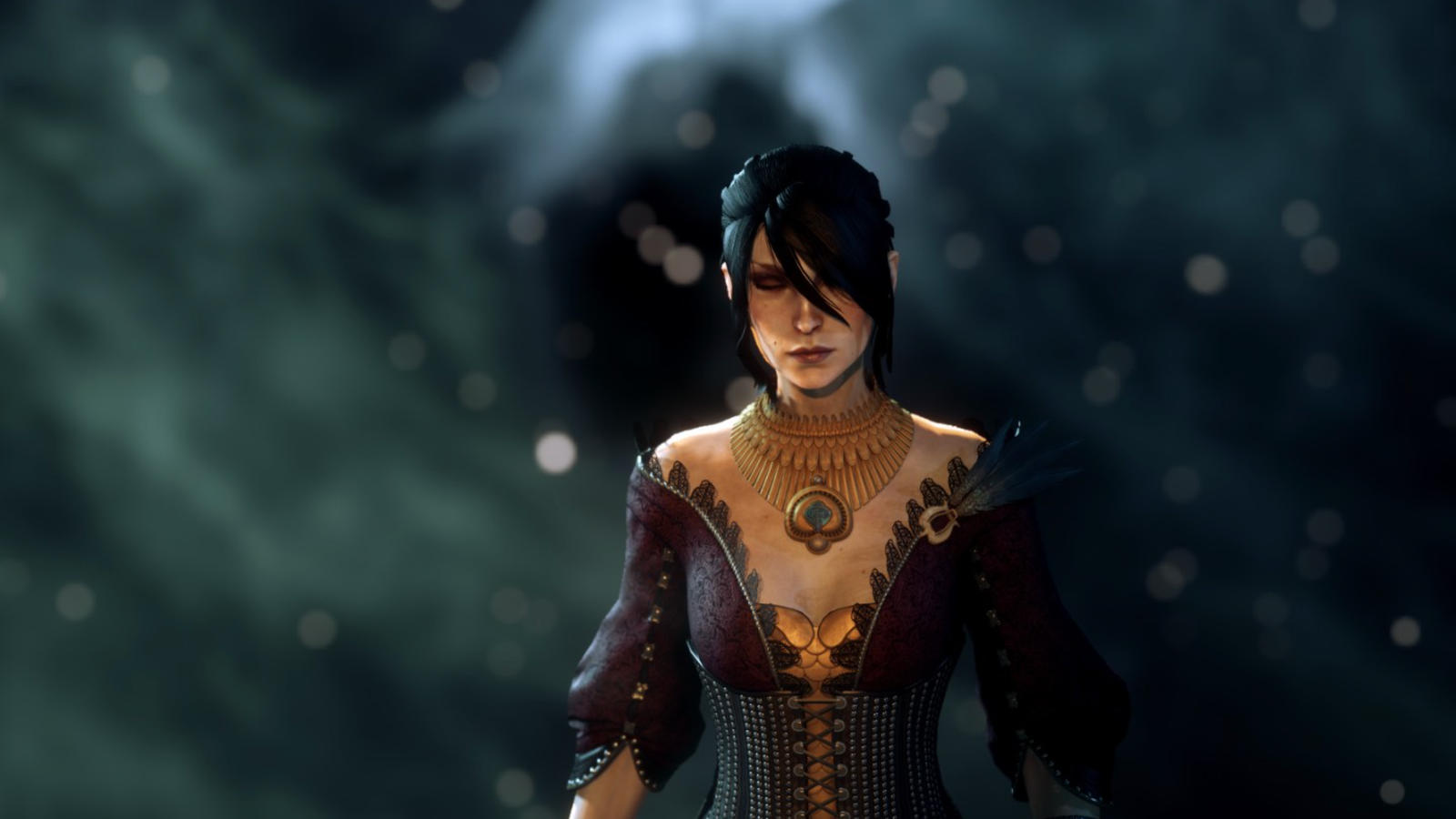
Farewell then, BioWare. This week, EA shuttered the Canadian RPG specialist, home of Mass Effect and Dragon Age. I’ll admit to never having been a fan — on a personal level, I didn’t click with the games. But I get it. I can see why these stories and characters meant so much to so many people, for their drama and scope, but particularly for BioWare’s eagerness for its games to be an affirming reflection of their players.
We’re in the middle of an outpouring of mourning for the studio, and for the Mass Effect Universe we never got. BioWare’s talented developers will hopefully all go on to great things elsewhere, and many already have. (Who’s looking forward to Exodus?) Maybe Mass Effect and Dragon Age will return; in this age of zombie IP, it seems a safe bet that they will. What’s really lost at a moment like this, though, is institutional knowledge and culture, the malleable but enduring practices and principles that survive the departure of founders and team leads and are nurtured by new hands. It’s a terrible loss.
Naturally, the blame game has begun, entangled in a gross culture war over the studio’s legacy. There’s a natural villain in EA, which acquired the company in 2007 but which never seemed to find the middle ground between its corporate culture and BioWare’s creative spirit. The nadir of this relationship was BioWare’s forced march into a genre it was ill-suited to with the would-be Destiny competitor Anthem. But the wheels had started to come off a good while before that.
We have to be real about this: BioWare’s very best work was 15 years behind it. Its last game, Dragon Age: The Veilguard, was better than it was made out to be, but after a horrendously mishandled development, it was neither good enough nor popular enough to guarantee the studio’s future. This is absolutely EA’s fault. Nothing about what BioWare was doing was inherently uncommercial, and you can imagine the studio, in a parallel universe, making a smash hit like Larian’s Baldur’s Gate 3 — a sequel to games BioWare itself made. You can bet that EA would be delighted to have a Baldur’s Gate 3 on its books, but the company is clearly incapable of allowing its studios to make one.
However, it’s always worth looking past the most convenient scapegoat to identify what other forces might be at work in a tragedy like this. EA badly mismanaged BioWare, but had resisted several previous opportunities to shutter it. It happened now because EA itself had been acquired, and was going through the ritual “restructuring” that capitalism demands in this circumstance. Similarly, it’s the aftershocks of Xbox’s massive acquisition spree in the late 2010s and early 2020s that are laying waste to so many jobs and studios there.
It’s well known that EA CEO Andrew Wilson was obsessed with finding a buyer for the publisher and doing a deal for its own sake, and had courted everyone from Apple and Amazon to Disney and Comcast. In the end, he sold EA to the Kingdom of Saudi Arabia: a terrible outcome for many reasons. But it’s unlikely to have gone much better anywhere else.
There are pure market forces at work here, and those are the forces of contraction and consolidation. The video game industry is going through a kind of slow-motion crash, or implosion. It still has outward signs of health — just wait for those GTA 6 sales numbers! — but it clearly can’t sustain itself. Audience growth has plateaued and the industry’s heedless, decades-long technology arms race is catching up with it. Too many games are being made, too expensively, and supply has left demand in the dust. This is what kills studios.
I’m afraid to say it’s going to get worse. This week, it emerged that Microsoft expects its next Xbox to cost between $1,200 and $1,800. PlayStation 6 will be a little cheaper, but probably still in four figures. The prices are so high due to external factors, like the ceaselessly rising cost of components, but they aren’t the whole problem. Both machines will be even more expensive to develop for than current hardware, yet will offer vanishingly diminishing returns in terms of visual fidelity. It was hard enough persuading users to upgrade from PS4 to PS5. Just you wait for the next round.
It has to stop. But it won’t. Microsoft and Sony are already committed, they have the parts on order. They know what’s coming and they’re walking right into it, taking the rest of us with them, and shrugging helplessly at their apparent powerlessness in the face of the industry’s sustainability crisis. Sad to say, BioWare won’t be the crisis’ last victim.


