
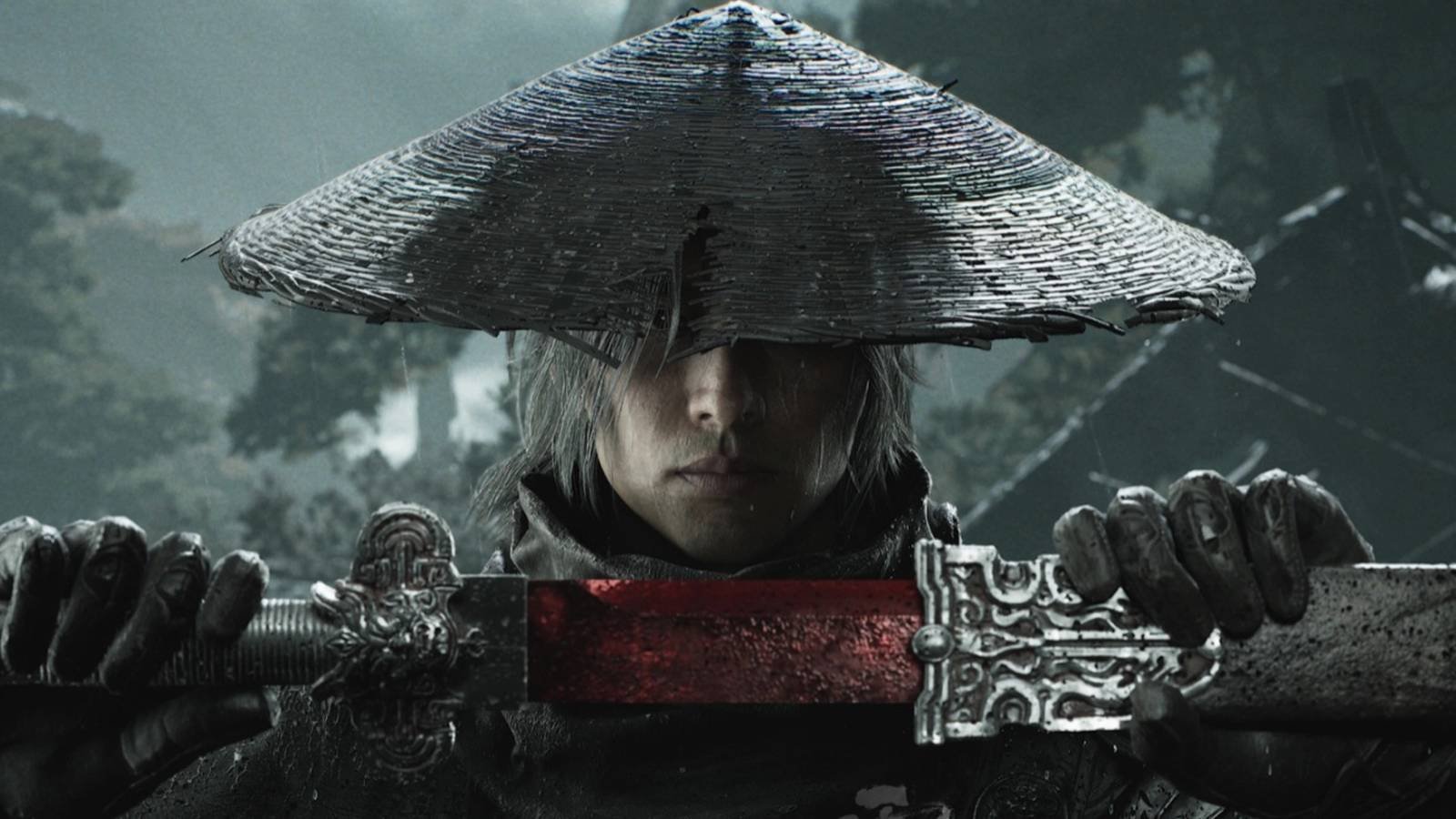
Phantom Blade Zero is out now, and players have flocked to what developer S-Game calls its “kungfupunk” world. 2026 has been a great year for action games, and Phantom Blade Zero stands out from the rest due to its focus on emulating the look and feel of wuxia stories, the Chinese genre that focuses on highly stylized martial arts.
Director Soulframe Liang said he wanted to “create a playable kung fu movie” with Phantom Blade Zero. As part of a preview event hosted by S-Game in China last month, Polygon spoke with him in a group Q&A and a one-on-one chat. That preview event also included a visit to the developer’s Shanghai motion capture studio, where the press heard from combat director Yang Liu.
Liang has been creating the world of Phantom Blade Zero for 20 years, beginning with the RPGMaker game Rainblood: Town of Death and continuing in two more Rainblood games, a few Phantom Blade mobile games, and the free-to-play Phantom Blade: Executioners. The action-packed Phantom Blade Zero is a new endeavor for him, being his and S-Game’s first big-budget, AAA game.
“Everything is so difficult because everything is new and we have to build everything from [the] ground up,” Liang said. “We have to innovate in a very special way to accomplish what we want.”
What Soulframe wanted was a game that emulates the look and feel of a wuxia film, with player character Soul moving and attacking like he’s a kung fu movie star on wires. That ambitious goal is “why we struggle so much,” Liang said. “We want to create something really different from what we have seen before” in terms of action games.
To help create that playable kung fu movie, Liang and S-Game brought a bona fide kung fu star on board: Donnie Yen, who’s starred in the Ip Man series, John Wick 4, and many, many more action-packed films.
“The first time I met Donnie was totally by accident,” Liang said. Mutual friends introduced them, and initially Soulframe and Yen didn’t plan to work together. Yen was excited for Phantom Blade Zero and happy to see a Chinese developer taking on such a project, as previously “the best kung fu game[s] [were] made by Japanese companies or French companies,” according to Liang. “Sifu was made by a French company, [and it] is even more authentic than most of the Chinese [kung fu games].”

Image: S-Game
Yen had been approached before by gaming companies for promotional work, and when S-Game initially reached out, that’s what he thought the studio was looking for. He quickly learned that wasn’t the case. “He realized we’re doing something authentic,” Liang said. The studio wanted to rely on “his experience and skill, not only his face.”
Yen is credited as a creative consultant on the game, influencing the game’s kung fu aesthetic and principles. He also plays Mó Yuan in Phantom Blade Zero, a character wearing a golden mask who pops up periodically, and at one point even fights in a cutscene while cradling a baby. Yen was filming projects like Caine (his John Wick spinoff film) during development, and so he would fly into Shanghai on weekends to help direct combat and record mo-cap for his character. Yen has a team of 15-20 people helping out, including The Furious director Kenji Tanigaki as an action director. Liang called Tanigaki an “apprentice of Donnie.”
Liang said “everything was surprising” in terms of what Yen and his team brought to development. They helped S-Game evolve Phantom Blade Zero from a “traditional” action game with a wuxia aesthetic into one that actually makes players feel like a wuxia hero. “If we are trying to explain and express more of the essence of Chinese kung fu, only having an appearance doesn’t make it enough,” Liang added. Applying wuxia fundamentals to Phantom Blade Zero presented a formidable challenge for the team, “because we’re trying to do something brand new.”

Image: S-Game
In comes Master Yang. That’s the on-set nickname for combat director Yang Liu, who is in charge of the day-to-day combat direction at S-Game’s motion capture studio. He’s studied Chinese martial arts and a variety of other fighting styles in addition to stage and combat direction, and he brought that expertise to Phantom Blade Zero.
At the motion capture studio, Liu explained how the game’s combat all stems from movement and how characters approach and react to one another. While in some games a weapon might have just a single attack animation when advancing forward, Liu conceptualizes at least 10 different styles of attack for each weapon in the game. (And there’s a lot of ‘em — 30 primary weapons and 25 secondary.) Players will notice how Soul’s opening attack animation might be different if he’s right under a towering boss as opposed to far away, when he leaps forward and strikes all at once.

Image: S-Game
While stylish aesthetics are important to S-Game, Liu ensured that every movement has a purpose and feels authentic. (And, yes, the animations do look cool as hell, too.) “We always emphasize that [what] we want to do [is] very authentic [and] deeply rooted in Chinese culture and martial arts,” Liu said. “We don’t want it to be just a surface level of being different.”
Liu’s approach is deeply rooted in Chinese tradition, and both he and Liang separately referenced Bruce Lee’s “Be water, my friend” philosophy during the motion capture studio visit. What that means is that there’s not a one-sized-fits-all approach when stringing together a combo sequence or series of animations in Phantom Blade Zero. “There’s always a circular path; it’s not just straightforward, it’s not just direct,” Liu said.
-
 Image: S-Game
-
 Image: S-Game
-
 Image: S-Game
-
 Image: S-Game
-
 Image: S-Game


-
 Image: S-Game
-
 Image: S-Game
-
 Image: S-Game
-
 Image: S-Game
-
 Image: S-Game


In keeping with this approach, Liang explained that a combo can’t just be sequential — one to two to three to four — but instead the first action has to be able to connect to any possible future action. You’ll notice that when shifting between light and heavy attacks in combat, and especially during the smooth animations that play when Soul switches weapons uninterrupted during a combo.
“We figure[d] out a very tricky, complicated system to merge different single movements together to make a flow,” Liang said.
Phantom Blade Zero’s combat is a collaborative effort between Liang, Liu, Yen and his team, the motion capture performers, and S-Game’s in-house team, whom Liang likened to “a translator” bringing the cinematic language of kung fu to the game. By all accounts, they successfully did just that, and now Phantom Blade Zero is firmly in the Game of the Year conversation.
“We’re not only doing something big and not only making use of the existing [Chinese] market, but also we’re trying to do something [that’s] received and accepted and loved all around the world,” Liang said. Mission accomplished.
Phantom Blade Zero is out now on Windows PC and PlayStation 5.


