
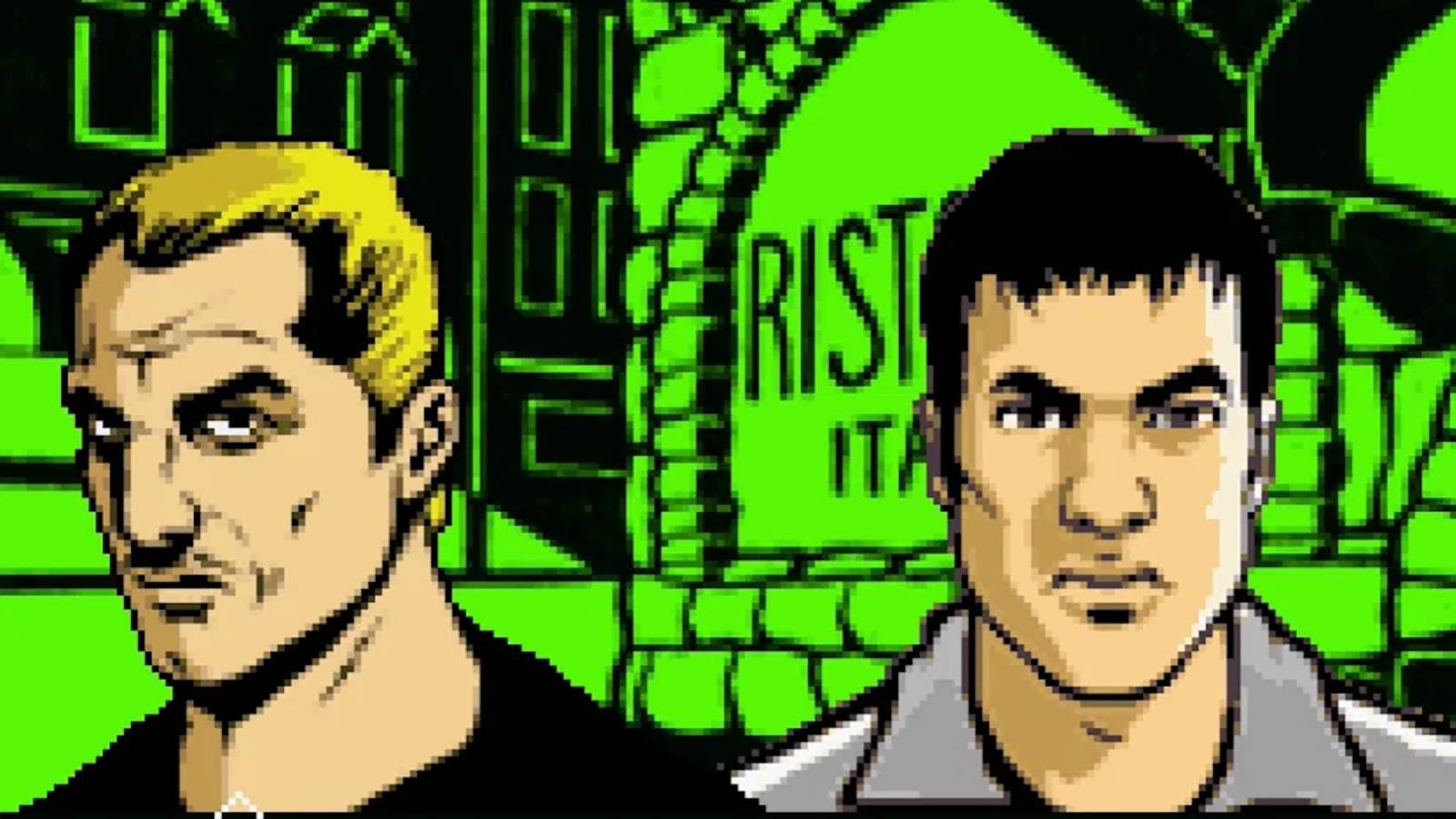
GTA Advance is an odd game. It’s terrible in some ways, yet also not as bad as its reputation suggests. It’s also an essential part of Rockstar history. This was Rockstar at a stage of uncertainty. The essence of the Grand Theft Auto franchise was still in flux, and the studio had yet to firmly decide on what, exactly, made a GTA game. GTA Advance has its strong points, but the most important thing about it is how it gave Rockstar (via developer Digital Eclipse) a chance to see where the series could fall short. It’s a necessary bad game that paved the way for better ones — and the kind of essential failure the games industry can’t tolerate anymore.
GTA Advance is a sort of loose GTA 3 prequel, with “loose” being the operative word. It takes place in Liberty City before GTA 3‘s Claude gets shot by his girlfriend, though you’d be hard-pressed to recognize Liberty City landmarks here (more on that in a bit). The star of GTA Advance is Mike, a petty criminal who — rather like Niko in GTA 4 — really doesn’t want a life of crime anymore. But this is GTA, and a life of crime is what Mike gets. The mafia kills his friend and partner-in-crime Vinnie, just as the two were about to leave Liberty City behind for good, and Mike gets embroiled in a revenge scheme to get back at the organized crime group. Not a smart idea on his part, but an exciting one nonetheless.
Mike’s missions involve tracking down information about Vinnie’s murderer, a dangerous game that gets him closer to the mafia with every new lead. It’s loaded with scrunchy pixel melodrama, and there’s a highly satisfying twist at the end that turns the whole story on its head. Rockstar is no stranger to vengeance tales or high-stakes crime drama, but modern GTA often has very loose stories. C.J. wants revenge in San Andreas, Tommy’s grudge is what keeps him in Vice City, and so on. But often, you feel disconnected from that need for revenge. The event that sparks it is so far removed from you and the character, or so clichéd, that it’s not a compelling motivation. The need to explore every corner of the city is what pushes you forward more. Mike’s story, despite occasionally veering into GTA 3 fan fiction territory, has a more immediate sense of urgency to it. That better life was so close and then someone yanked it right out from under you for no good reason.
Mike’s struggles take a backseat to your struggle of getting through GTA Advance, though. Digital Eclipse and Rockstar’s ambition outstripped the Game Boy Advance’s capabilities, and the poor little system struggles to keep up with the game. Framerates are awful, and the controls are terribly clunky. Well, most Rockstar games have clunky controls, but when everything you need to do is confined to fewer buttons laid out across a smaller space, things get more complicated than they need to be.
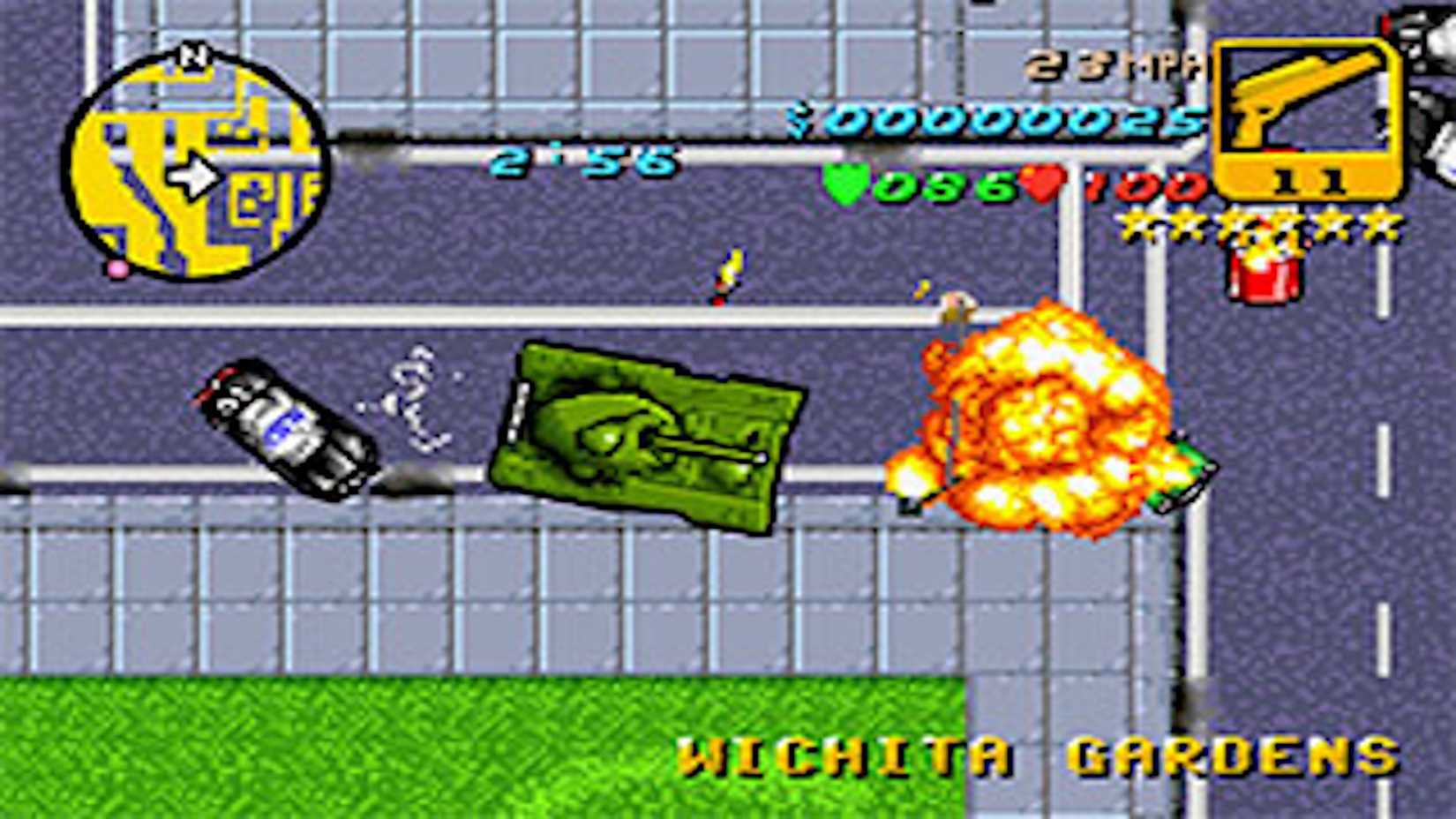
Image: Digital Eclipse/Rockstar Games
Which is a shame, as GTA Advance is a fascinating look at GTA’s adolescence, one worth examining even if it does suck to play. It’s Rockstar in an uncharacteristically indecisive moment, trying to fuse modern GTA with the series’ classic top-down style, marketed to an audience that probably didn’t plan on buying a GTA game when they picked up the tiny purple handheld. GTA Advance tries adapting the open-ended nature of its 3D siblings to the hardware constraints of the Game Boy Advance, and Rockstar even marketed it as a continuation of the 3D games.
“The legendary, rule-breaking and genre-defying Grand Theft Auto franchise has arrived on the Game Boy Advance,” the game’s promotional material read. “Return to the streets of Liberty City in a brand-new story, all new missions, and classic open-ended Grand Theft Auto gameplay.”
That was wishful thinking on Rockstar’s part. The open-endedness is reserved for exploring the city — rendered fantastically, it must be said, even if it wasn’t as visually astounding as its contemporaries — and to a lesser extent, taking on side missions. Mike’s critical story path is linear, though the side missions aren’t too different from what you’d find in Vice City. You’ve got your street races, firefighting missions, vigilante missions, all the stuff Rockstar loaded in modern GTA. Just in a much smaller, choppier package with worse radio stations. Those details may seem trivial, but Rockstar soon learned they were hugely important to its audience.
Free sign-up
Get Polygon’s Wishlister newsletter
A weekly cheat sheet to what you’ll eventually love to play. No buying, no
commitment — just saving for later.
Free. Unsubscribe anytime.
But that’s okay! Playing GTA Advance is much less fun than talking about GTA Advance, but bad games are necessary. No one produces perfection the first time out. The modern games industry has no room for underperforming or less-than-perfect games anymore. Hell, it barely has room for best-sellers anymore. Room for iteration and improvement is essential, though, and you can look at Rockstar’s later portable GTA games as an example. Chinatown Wars for the Nintendo DS and PlayStation Portable (developed in-house by Rockstar) met with warm praise, which singled out just how expertly Rockstar adapted the soul of GTA to a more restrictive format. GTA Advance might be a crummy game, but that crumminess and determining what doesn’t work for GTA, was an essential stepping stone for the series’ future.


